Quick verdict
Choose espresso for concentrated shots and milk drinks; choose drip for a shared pot of black coffee. Compare the total routine, including grinding, milk preparation and cleanup, rather than brewing time alone.
Review method: This assessment uses product information and owner feedback, rather than our own hands-on performance tests. Customer experiences are attributed reports, not measured defect rates. Historical prices and ratings are not live offers; confirm the exact model, bundle and current seller terms.
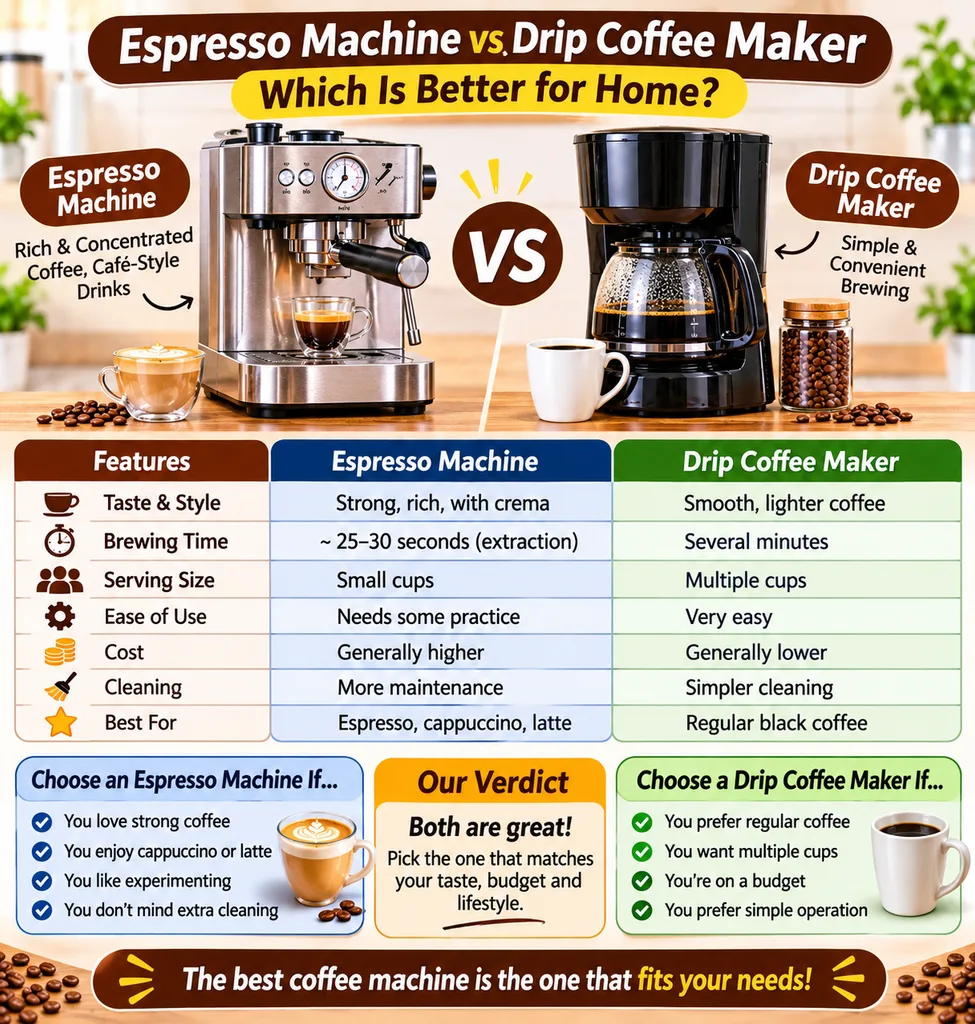
Espresso Machine vs Drip Coffee Maker: Quick Comparison
Before exploring the differences in detail, here is a quick comparison of both coffee machines.
| Feature | Espresso Machine | Drip Coffee Maker |
|---|---|---|
| Best for | Espresso, lattes, cappuccinos | Regular black coffee and larger servings |
| Coffee taste | Rich, concentrated, and intense | Smooth, lighter, and easy to sip |
| Brewing method | Uses pressure to brew coffee | Hot water passes through coffee grounds using gravity |
| Preparation time | Usually quick for a single shot, plus preparation | Generally several minutes for a full pot |
| Serving size | Usually one or two shots at a time | Often several cups in one brewing cycle |
| Ease of use | Depends on the machine; manual models require practice | Generally simple and beginner-friendly |
| Milk frothing | Available on models with a steam wand or frother | Usually requires separate equipment |
| Cleaning | More parts to maintain, especially milk systems | Usually straightforward |
| Initial cost | Often higher, particularly with a separate grinder | Usually more affordable |
| Coffee for several people | Requires preparing multiple drinks | Convenient for preparing a batch |
| Best choice for | Coffee lovers who enjoy café-style drinks | People who prefer everyday brewed coffee |
The simple answer: Choose an espresso machine if you want espresso-based drinks. Choose a drip coffee maker if you want convenient, everyday coffee in a mug or a larger pot.
Neither machine is automatically better than the other. The right choice depends on the coffee you enjoy drinking.
1. What Is an Espresso Machine?
An espresso machine is designed to prepare espresso, a small and concentrated coffee drink. It pushes hot water through finely ground coffee to produce a rich shot with an intense flavour.
Espresso is often served on its own, but it is also used to prepare many popular café drinks.
For example, you can use espresso to make:
- Latte: Espresso combined with steamed milk and a small amount of milk foam.
- Cappuccino: Espresso with steamed milk and a thicker layer of foam.
- Americano: Espresso diluted with hot water.
- Mocha: Espresso mixed with chocolate and milk.
- Macchiato: Espresso with a small amount of milk or milk foam.
This variety makes espresso machines attractive to people who enjoy experimenting with different coffee drinks.
How Does an Espresso Machine Work?
The process depends on the type of machine, but a traditional espresso machine generally works like this:
- Add finely ground coffee to the machine’s coffee basket.
- Spread the coffee evenly and press it down when required by the machine.
- Start the brewing process.
- Hot water passes through the coffee under pressure.
- A small, concentrated espresso shot flows into your cup.
If your machine includes a steam wand, you can also heat and froth milk for drinks such as lattes and cappuccinos.
Some espresso machines are manual or semi-automatic, while others handle most of the preparation automatically. Capsule machines offer another convenient option, although they use compatible capsules rather than loose coffee grounds.
If you want to explore a convenient espresso option for beginners, read our Nespresso Essenza Mini Coffee Machine Review.
Advantages of an Espresso Machine
1. You can prepare different coffee drinks
An espresso machine with suitable milk-frothing features lets you make several café-style drinks at home. You can enjoy an espresso in the morning and prepare a cappuccino or latte later in the day.
2. Rich and concentrated coffee
Espresso offers a strong, concentrated flavour in a small serving. It is particularly appealing to people who prefer an intense coffee taste.
3. More control over your coffee
Many traditional espresso machines allow you to adjust the coffee quantity, grind size, and other preparation settings. This can help you find a taste that suits your preference.
4. A café-style experience at home
If you enjoy preparing your own coffee, an espresso machine can make your daily routine more enjoyable. You can experiment with different beans, milk textures, and recipes.
Disadvantages of an Espresso Machine
Despite its benefits, an espresso machine may not suit everyone.
- It can cost more: The machine itself may be more expensive than a basic drip coffee maker. A suitable grinder and other accessories can increase the total cost.
- Some models require practice: Getting a balanced espresso shot can take time, particularly with manual and semi-automatic machines.
- Cleaning takes attention: Coffee residue needs regular cleaning, and milk systems require additional care.
- It usually prepares smaller servings: Traditional espresso machines make individual shots rather than a large pot of coffee.
- The features vary by model: Not every espresso machine includes a milk frother, built-in grinder, or automatic drink settings.
If your priority is espresso and milk-based drinks, these drawbacks may be worth accepting. However, if you simply want a large mug of black coffee every morning, an espresso machine might offer more features than you actually need.
2. What Is a Drip Coffee Maker?
A drip coffee maker is a simple appliance designed to prepare regular brewed coffee. It heats water and allows it to pass through ground coffee placed inside a filter.
The brewed coffee then collects in a carafe or jug.
Drip coffee makers are popular because they are straightforward to operate and can prepare several servings in one cycle. They are particularly useful for families, couples, office spaces, and people who drink multiple cups of coffee throughout the day.
How Does a Drip Coffee Maker Work?
Making coffee with a typical drip machine involves only a few steps:
- Add water to the water reservoir.
- Place a paper or reusable filter in the filter basket, if required.
- Add ground coffee suitable for drip brewing.
- Start the machine.
- Wait for the hot water to pass through the coffee grounds and collect in the carafe.
Once brewing is complete, your coffee is ready to serve.
You can drink it black or add milk, sugar, or your preferred sweetener.
Unlike a traditional espresso machine, a standard drip coffee maker does not produce true espresso because it does not use the same high-pressure brewing process.
Advantages of a Drip Coffee Maker
1. Easy for beginners
A drip coffee maker usually requires very little effort. Add water, measure the coffee, and press the start button. You do not need to learn how to prepare espresso shots.
2. Great for multiple cups
Many drip coffee makers can prepare several servings in one cycle. This is helpful when everyone in the household wants coffee around the same time.
3. Generally affordable
Basic drip machines are often available at lower prices than traditional espresso machines. You can also avoid the extra expense of buying an espresso grinder or milk-frothing accessories.
4. Simple cleaning
Most models require you to empty the used coffee grounds, clean the filter basket, and wash the carafe. You should also follow the manufacturer’s instructions for descaling.
5. Ideal for everyday coffee
If you enjoy drinking a regular cup of coffee while working, reading, or having breakfast, a drip machine can be a practical choice.
Disadvantages of a Drip Coffee Maker
Drip coffee makers also have some limitations.
- They do not make true espresso: You cannot prepare authentic espresso shots using a standard drip machine.
- Fewer built-in drink options: Most models focus on regular brewed coffee rather than cappuccinos and lattes.
- Brewing a full pot takes time: You generally need to wait several minutes for a complete batch.
- Milk frothing is not usually included: You may need a separate frother if you enjoy foamy milk in your coffee.
- Large servings are not always convenient: If you only want a tiny, concentrated coffee, brewing a whole pot may not suit your routine.
For readers interested in a drip-style option for home use, our Preethi Cafe Zest Drip Coffee Maker Review explores a machine designed for South Indian-style filter coffee preparation.
3. Espresso Machine vs Drip Coffee Maker: Taste and Coffee Strength
Taste is one of the biggest differences between these two machines.
Both can make enjoyable coffee, but the flavour, texture, and concentration are different.
Espresso Machine: Rich and Intense
Espresso is concentrated because a relatively small amount of water passes through finely ground coffee under pressure.
This creates a small serving with a bold flavour and a fuller texture. A well-prepared espresso may also have a golden-brown foam on top, commonly called crema.
Espresso is a good choice if you enjoy:
- Rich coffee flavour in a small serving.
- Coffee with a fuller texture.
- Concentrated drinks that pair well with milk.
- Espresso shots used as the base for other recipes.
However, a strong taste does not automatically mean that espresso contains more total caffeine than a large cup of drip coffee.
Drip Coffee Maker: Smooth and Easy to Drink
Drip coffee is generally less concentrated than espresso. Since it is prepared with more water, it is usually served in larger quantities.
Its flavour can range from light and delicate to rich and bold, depending on the beans, roast, grind, and amount of coffee used.
Drip coffee is a good choice if you prefer:
- A regular mug of coffee.
- Coffee that you can sip over a longer period.
- A clean, filter-brewed taste.
- Larger servings without preparing multiple espresso shots.
Which Machine Makes Stronger Coffee?
The answer depends on what you mean by strong.
Espresso is more concentrated, so its flavour is generally more intense per sip. However, a large mug of drip coffee may contain more total caffeine than a single espresso shot because the serving is much bigger.
If you want an intense, small coffee, choose espresso. If you prefer a larger serving that you can enjoy throughout the morning, drip coffee may be more suitable.
4. Brewing Time: Which Machine Is Faster?
Both machines can fit into a busy routine, but the way they prepare coffee is different.
Espresso Machine
An espresso shot can be brewed in roughly 25–30 seconds once the machine is ready, although the total preparation time may be longer.
You may need to allow time for the machine to heat up, grind the beans, prepare the coffee, and clean the equipment afterwards.
If you make a latte or cappuccino, steaming the milk adds another step.
Automatic and capsule-based espresso machines can simplify this process considerably.
Drip Coffee Maker
A drip coffee maker generally takes several minutes to prepare a batch of coffee. The exact time depends on the machine and the amount of coffee being brewed.
However, you do not need to stand beside it throughout the brewing process. Once you have added the water and coffee, the machine handles the rest.
Which Is Better for Busy Mornings?
If you want one espresso shot or a quick café-style drink, an automatic espresso machine may suit you.
If you want enough coffee for several people, a drip coffee maker is often more convenient because it prepares multiple servings in a single cycle.
The better option depends on whether you prioritise a quick individual drink or a ready-to-serve batch.
5. Ease of Use: Which Is Better for Beginners?
Ease of use is especially important if you have never owned a coffee machine.
Espresso Machines Require Different Levels of Skill
Not every espresso machine is difficult to operate.
A capsule machine or fully automatic model can make coffee with very little effort. Some machines grind the beans and prepare the drink at the touch of a button.
Traditional semi-automatic machines require more involvement. You may need to measure coffee, adjust the grind, press the grounds into the basket, and learn how to prepare a consistent shot.
This learning process can be enjoyable for coffee enthusiasts, but it may feel unnecessary if you only want a simple morning drink.
Drip Coffee Makers Are Usually Simpler
Drip coffee makers are generally easier for first-time users.
You add the coffee and water, start the machine, and wait for the brewing cycle to finish. Some models also include timers, allowing you to prepare the machine in advance.
There is no need to learn espresso preparation techniques.
Our recommendation: If you want the simplest possible routine for regular brewed coffee, start with a drip coffee maker. If you enjoy espresso drinks and are comfortable with a few extra steps, consider an espresso machine.
6. Cleaning and Maintenance
Cleaning is an important part of owning any coffee machine. A machine that is easy to maintain is more likely to remain convenient for everyday use.
Cleaning an Espresso Machine
Traditional espresso machines may have several parts that require attention.
After use, you may need to:
- Empty and rinse the coffee basket or portafilter.
- Remove used coffee grounds.
- Wipe the brewing area.
- Clean the drip tray.
- Wipe and purge the steam wand according to the manufacturer’s instructions.
- Descale the machine when necessary.
If your machine has a built-in milk system, keeping it clean is particularly important because milk residue can build up quickly.
Capsule machines may require less daily handling of loose grounds, but they still need regular cleaning and descaling.
Cleaning a Drip Coffee Maker
A drip coffee maker is generally easier to maintain.
After brewing, remove the used grounds and filter, if disposable. Wash the reusable filter basket and carafe as directed by the manufacturer.
You should also clean the machine periodically to remove coffee residue and mineral deposits from the water.
Descaling frequency depends on how often you use the machine, the hardness of your water, and the manufacturer’s recommendations.
Which Machine Is Easier to Maintain?
For most households, a basic drip coffee maker requires less daily cleaning than a traditional espresso machine, particularly one with a steam wand.
However, the exact amount of work depends on the model. An automatic espresso machine with removable parts may be easier to maintain than a complicated manual setup.
7. Price and Long-Term Cost
Price is another important factor when comparing an espresso machine with a drip coffee maker.
It is worth considering both the initial purchase price and the cost of making coffee over time.
Initial Purchase Cost
Basic drip coffee makers are generally more affordable. Many models focus on essential functions, so you may not need to pay for additional accessories.
Espresso machines are available at different price levels, from simple entry-level models to advanced machines with automatic grinding and milk preparation.
However, a traditional espresso setup may require a separate grinder, tamper, milk jug, and other accessories. These additional items can increase the total cost.
Cost of Coffee
Your ongoing coffee expenses depend on the type of beans or coffee you purchase and how much you use for each serving.
With a drip coffee maker, you can prepare several cups from one batch of ground coffee. This can make it economical for households that drink multiple cups every day.
With a traditional espresso machine, you may use a measured amount of coffee for each shot. The cost depends on the beans, serving size, and number of drinks you prepare.
Capsule-based espresso machines have a different cost structure because you need compatible capsules for each drink.
Electricity and Maintenance Costs
Both types of machines use electricity, and the amount depends on their power rating, brewing time, and usage.
You should also consider replacement filters, cleaning supplies, descaling products, and any repairs that may be needed.
Rather than assuming one machine is always cheaper to operate, estimate your actual daily coffee consumption.
For example, a person who drinks one espresso every morning may have different needs from a family that prepares six mugs of coffee daily.
Buying tip: Compare the total cost of the machine, necessary accessories, and your expected coffee consumption before making a purchase.
8. Which Machine Is Better for Different Types of Coffee Drinkers?
The easiest way to decide is to consider how you normally drink coffee.
For People Who Prefer Black Coffee
If you usually drink black coffee from a mug, a drip coffee maker is often the more practical choice.
It is straightforward to operate and can prepare enough coffee for several servings.
An espresso machine can also make black coffee, particularly when preparing an Americano, but that involves a different brewing process.
For Latte and Cappuccino Lovers
An espresso machine is the better choice if you regularly enjoy lattes, cappuccinos, or similar café drinks.
Choose a model with a suitable steam wand or milk-frothing system if you want to prepare these drinks conveniently.
A drip coffee maker cannot produce espresso or steam milk on its own. You can add milk to drip coffee, but the result is not the same as a traditional espresso-based latte.
For Families
A drip coffee maker is often more convenient for families where several people enjoy regular brewed coffee.
You can prepare a batch in one cycle instead of making separate drinks for everyone.
However, if family members have different preferences, the best choice depends on what they drink most often.
For Students and People Working From Home
If you have limited space or a small budget, a basic drip coffee maker can be a sensible starting point.
If you prefer a concentrated coffee or enjoy preparing café-style drinks between tasks, a compact espresso machine may be worth considering.
Measure your available counter space before buying either machine.
For Coffee Enthusiasts
If you enjoy trying different beans, experimenting with recipes, and learning how to improve each cup, an espresso machine may be more rewarding.
Many traditional models offer more control over preparation.
However, if your interest is in exploring the flavours of different coffees in larger servings, a drip coffee maker can also provide an enjoyable coffee experience.
9. Can a Drip Coffee Maker Make Espresso?
No. A standard drip coffee maker cannot make authentic espresso.
The main reason is the brewing method. Espresso requires hot water to pass through finely ground coffee under pressure. A drip coffee maker allows hot water to flow through coffee grounds using gravity.
You can make stronger drip coffee by changing the amount of coffee and water, but it will not have the same characteristics as espresso.
Similarly, adding milk to strong drip coffee does not turn it into a traditional latte or cappuccino.
If you want genuine espresso-based drinks, choose an espresso machine designed for that purpose.
10. Can an Espresso Machine Make Regular Coffee?
Some espresso machines can prepare drinks that resemble regular coffee, but it depends on the model.
For example, you can add hot water to espresso to make an Americano. This creates a larger drink, although its taste is not identical to drip coffee.
Certain fully automatic machines also include a dedicated coffee or long-coffee setting. These models can offer more flexibility than traditional espresso machines.
Before buying, check whether the machine can prepare the type of coffee you drink most often.
If your main goal is to prepare large quantities of traditional brewed coffee, a drip coffee maker remains a straightforward option.
11. What Should You Check Before Buying a Coffee Machine?
Once you understand the differences, consider the following points before making your purchase.
Your Preferred Coffee
Start by identifying the drinks you enjoy most.
If you prefer black coffee in a large mug, look at drip coffee makers. If you enjoy espresso shots, lattes, and cappuccinos, focus on espresso machines.
Your Budget
Set a budget that includes the machine and any necessary accessories.
For an espresso machine, check whether a grinder and milk-frothing equipment are included. For a drip coffee maker, check whether you need paper filters or can use a reusable filter.
Brewing Capacity
Think about how many servings you normally prepare.
A drip machine with a suitable carafe may be convenient for several coffee drinkers. An espresso machine is often better for preparing individual drinks.
Check the manufacturer’s stated capacity rather than assuming that a machine’s advertised cup count equals the number of large mugs it can fill.
Ease of Cleaning
Look for removable parts that are easy to rinse and maintain.
If you choose an espresso machine with a steam wand or milk system, make sure you are comfortable with the additional cleaning routine.
Available Space
Measure your countertop before buying.
Check the machine’s height as well as its width, particularly if it will sit beneath a kitchen cabinet. Leave enough room to access the water reservoir and remove the parts that need cleaning.
Useful Features
For drip coffee makers, features such as a programmable timer, automatic shut-off, and a thermal carafe may be useful.
For espresso machines, consider whether you need a milk frother, built-in grinder, adjustable drink settings, or automatic operation.
Avoid paying extra for features that you are unlikely to use.
12. Espresso Machine vs Drip Coffee Maker: Final Verdict
Both machines can help you enjoy fresh coffee at home, but they are designed for different preferences.
An espresso machine is best suited to people who want concentrated coffee, espresso shots, and café-style drinks. Depending on the model, it can also provide more control over how each drink is prepared.
A drip coffee maker is a practical choice for people who enjoy regular brewed coffee, want a simple morning routine, or need to prepare several servings at once.
Here is our final recommendation:
- Choose an espresso machine if you love espresso, lattes, cappuccinos, and other espresso-based drinks.
- Choose a drip coffee maker if you prefer regular black coffee, larger servings, and straightforward brewing.
- Consider owning both if you regularly drink both types of coffee, have enough counter space, and are comfortable with the additional expense.
There is no need to buy the more complicated or expensive machine simply because it has more features. The best coffee machine is the one that fits your taste, budget, and daily routine.
Before making your final decision, explore our Nespresso Essenza Mini Coffee Machine Review for a compact capsule-based espresso option and our Preethi Cafe Zest Drip Coffee Maker Review for a drip-style machine designed for South Indian filter coffee preparation.
With the right machine, making coffee at home can become a simple and enjoyable part of your everyday routine.
What will your coffee cost each month?
Illustrative calculation, not current market pricing: assume coffee costs ₹600 per 250 g. An 18 g espresso dose costs ₹43.20; a 15 g drip dose costs ₹36. At one serving daily for 30 days, that is ₹1,296 versus ₹1,080 for coffee alone. Different doses change the result. Milk, electricity, grinder, cleaning supplies and the machine are extra. Replace these assumptions with your own coffee price and recipe.
For a simple carafe option, compare the Borosil drip coffee maker with Preethi Cafe Zest. For an overview of the brewing options, use our home coffee machine buying guide.
Frequently Asked Questions (FAQs)
1. Which is better, an espresso machine or a drip coffee maker?
Neither is universally better. An espresso machine is better for concentrated espresso and drinks such as lattes and cappuccinos. A drip coffee maker is better for regular brewed coffee and preparing several servings at once.
2. Is espresso stronger than drip coffee?
Espresso is more concentrated and usually has a more intense taste per sip. However, a large cup of drip coffee can contain more total caffeine than a single espresso shot. The amount depends on the serving size, coffee used, and brewing method.
3. Which coffee machine is best for beginners?
A drip coffee maker is usually the easiest option for beginners who want regular brewed coffee. Capsule and fully automatic espresso machines can also be beginner-friendly if you prefer espresso-based drinks.
4. Is a drip coffee maker cheaper than an espresso machine?
Basic drip coffee makers generally cost less upfront. Espresso machines may require additional accessories, such as a grinder or milk-frothing equipment. The actual cost depends on the models you compare and your coffee habits.
5. Can I make a latte with a drip coffee maker?
A standard drip coffee maker cannot prepare a traditional espresso-based latte by itself. You can combine drip coffee with heated or frothed milk, but the result will differ from a latte made with espresso.
6. Which machine is better for a family?
A drip coffee maker is often more convenient for families that drink regular brewed coffee because it can prepare several servings in one cycle. An espresso machine may be more suitable for families who prefer individual espresso-based drinks.
7. Does an espresso machine need a grinder?
Not always. Some espresso machines include a built-in grinder, while capsule machines use compatible capsules. Traditional machines that use loose coffee grounds often benefit from a suitable grinder capable of producing a consistent fine grind.
8. Which coffee machine is easier to clean?
A basic drip coffee maker is generally easier to clean because it has fewer parts that need attention after brewing. Espresso machines may require additional cleaning, especially when they include a steam wand or milk system.
9. Can I use the same coffee beans in both machines?
Yes. You can use the same beans in both, but the grind size should suit the brewing method. Espresso generally requires a finer grind, while drip coffee usually works best with a medium grind, depending on the brewer.
10. Should I buy an espresso machine or a drip coffee maker for home use?
Choose based on the drinks you enjoy most. If you usually drink black coffee from a mug, a drip coffee maker is a practical choice. If you prefer espresso shots, cappuccinos, or lattes, an espresso machine is likely to suit you better.
11. Can an espresso machine replace a drip coffee maker?
It can replace a drip coffee maker for some people, especially if the espresso machine offers a suitable long-coffee setting or you enjoy Americanos. However, the taste and brewing process are different, and preparing a large batch may be less convenient.
12. Is it worth owning both machines?
Owning both can make sense if you regularly enjoy traditional brewed coffee and espresso-based drinks. However, if you mainly drink one type of coffee, buying the machine designed for that preference is usually simpler and more economical.